1
Conférence
Keynotes et conférences de praticiens internationaux. 350 places.
Jour 1

Turning ideas into impactful enterprises.

Henry Mintzberg
Writer and Educator
McGill University

Cynthia Savard Saucier
VP of Design
Shopify

Richard Chénier
Directeur Général
Québec Tech

Maxime Blackburn-Boulianne
Senior Advisor in Innovation

Ren Pope
Chief Enterprise Architect
State of California — California Department of Technology

Scott Ambler
Data Methodologist
Ambysoft Inc.

Annika Klyver
Senior Enterprise Designer/Architect
TRATON R&D

Julie Pichette
Director, Strategy & Continuous Improvement
Lassonde Industries

Kevin Brennan
Business Architect & Professor
CAAT Pension Plan

Anthony Régent
Transformation Design Leader
onepoint
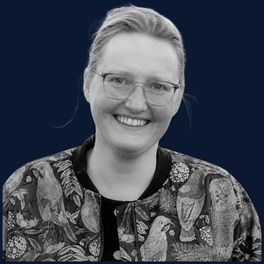
Marloes Sikkema
Founder
AMICA Innovation

David Beauchemin
Directeur général
Baseline

Robert Zuili
VP, gouvernance scientifique, R&D, relations publiques
Be Well Together

Chloé Feret
Leader Strategy, Transformation & Innovation
Onepoint

Curtis Michelson
Co-founder
Jedi on the Fly

Nate Gerber
Strategic Designer
Interplxy / Tetradian Collective
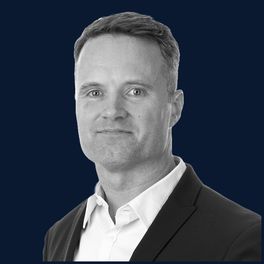
Helgi Björgvinsson
Managing Director
Intersection Group

Milan Guenther
President
Intersection Group

Daniel Simon
Founder
ACROSS & AHEAD

Paulo Tonin
Community Lead
Intersection Group
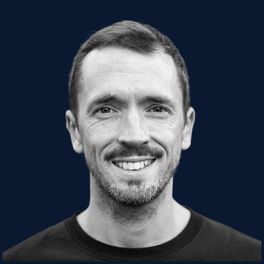
Bertrand Lirette
Gestionnaire de produit, stratégie
Kaleido
Du 7 au 9 octobre 2026, Montréal accueille une première nord-américaine : la conférence mondiale consacrée à l’art de réinventer et de piloter les entreprises de demain.
L’innovation commence par une étincelle : un éclair de lucidité, une irritation persistante, une nouvelle technologie, une question audacieuse. Mais une étincelle seule n’entretient pas le feu. Le véritable défi de l’innovation et du changement, aujourd’hui, n’est pas de produire des idées : c’est de concevoir et d’architecturer les systèmes qui leur permettent de survivre, de prendre de l’ampleur et de produire un impact réel. Cette année, nous dépassons le « théâtre de l’innovation » pour explorer la mécanique de l’impact.
Intersection 26 s’adresse à celles et ceux qui conçoivent, pilotent et transforment les organisations : architectes d’affaires, entrepreneurs, intrapreneurs, designers, leaders d’opinion et dirigeants. Nous invitons des personnes du monde entier à explorer ce que créer une entreprise veut dire en 2026.
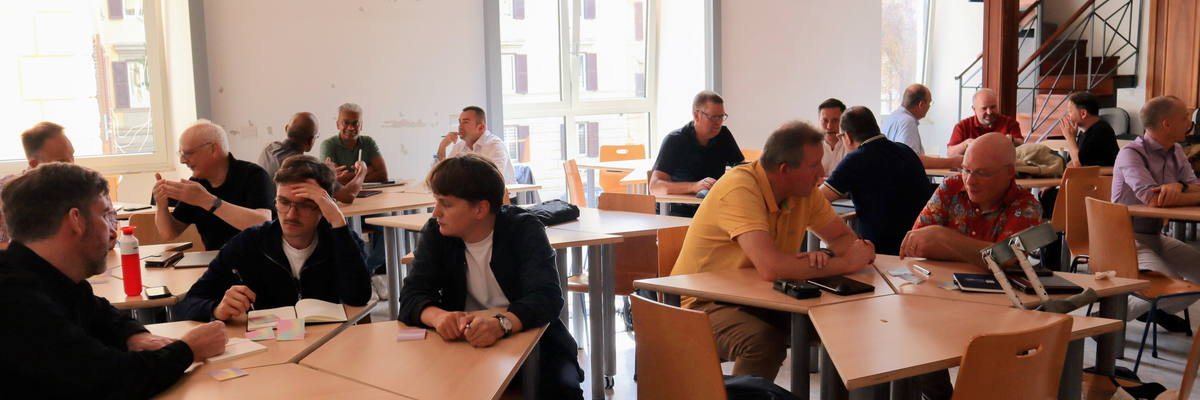
Rome, Italie · 2024

Stockholm, Suède · 2022
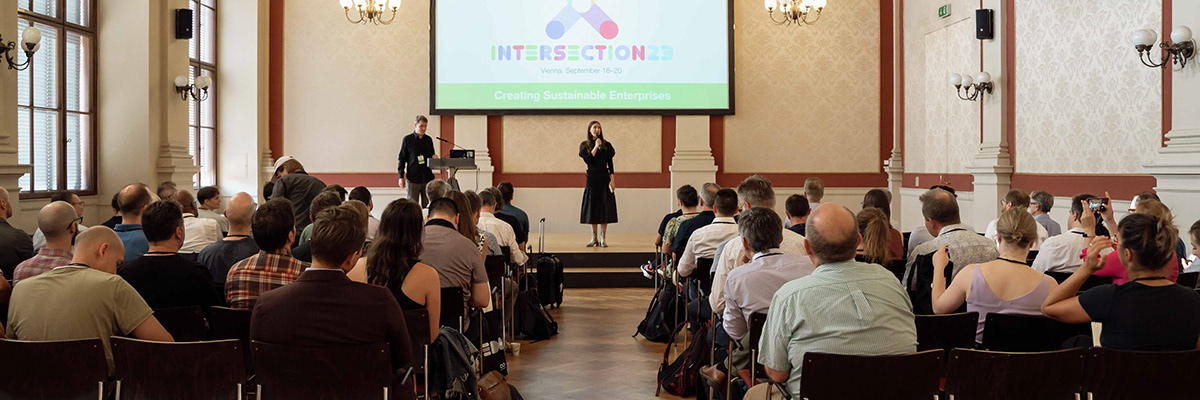
Vienne, Autriche · 2023
Une formule qui s’adapte à chaque édition.
Parce que les marchés mutent, notre format s’adapte chaque année pour répondre directement à vos défis stratégiques. Au programme : la vision de leaders internationaux pour décrypter les transformations mondiales, casser les codes et bousculer les modèles établis.
Une première à Intersection : une journée complète en programme bilingue, pensée pour échanger sans langue de bois avec des pairs qui partagent vos réalités.
1
Keynotes et conférences de praticiens internationaux. 350 places.
Jour 1
2
Une deuxième journée complète, qui se termine par la soirée réseautage organisée par MT Lab. 350 places.
Jour 2
3
Ateliers pratiques et co-création. Programmation bilingue, volontairement restreinte.
Limité à 150
22
Conférences
4
Ateliers
4
Keynotes
2
Soirées
1
Webinaire
Thèmes du programme
Commanditaires et partenaires



















Dépassez l’étincelle. Repartez avec la mécanique qui transforme une idée en quelque chose qui tient.
Stratégie, architecture, design et produit parlent une seule langue pendant trois jours.
Concevez des modèles qui survivent au contact d’un marché qui ne tient pas en place.
Sortez de votre écosystème habituel, échangez sans langue de bois avec des pairs qui partagent vos réalités, et nouez des liens durables avec des professionnels passionnés.
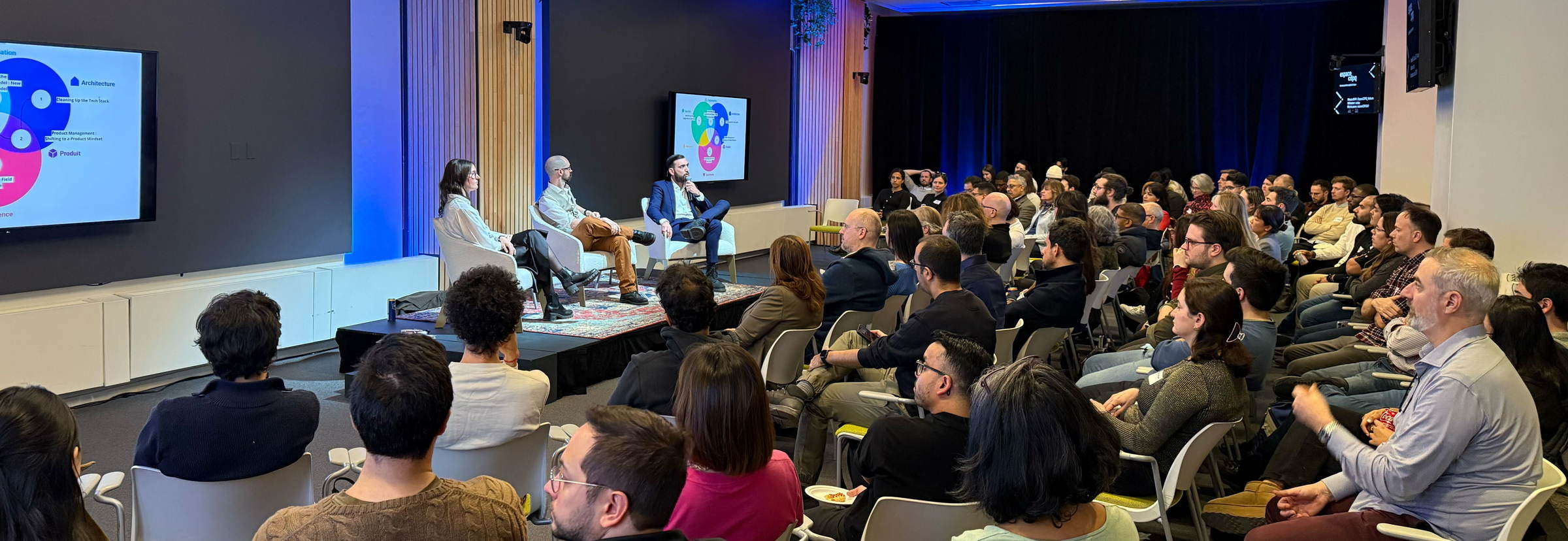
Quatre keynotes, quatre ateliers et trente-sept conférenciers, en anglais et en français — plus une séance virtuelle gratuite en septembre, un pré-événement en soirée et une soirée réseautage organisée par MT Lab.
Mercredi 16 septembre · 11 h EDT / 17 h CEST · Séance virtuelle



Designing Shared Understanding Across Complex Change
Most organisations already use many ways to describe and navigate change: diagrams, journeys, roadmaps, sticky notes, spreadsheets, architecture maps in ArchiMate® or BPMN, service blueprints and more. Yet teams still struggle to create shared understanding across disciplines, silos and levels of complexity.
In this session, Daniel Simon (Across & Ahead) presents new survey findings on how enterprise professionals actually work in practice. The results challenge the idea that one method, framework or language can solve everything. Instead, they reveal a more hybrid reality: successful teams combine multiple tools and approaches depending on the people, context and challenge.
The session also explores why many modelling approaches fail to gain traction outside specialist groups, and what can make enterprise design more collaborative, accessible and useful for real transformation work.
Following the presentation, Daniel is joined by Milan Guenther and Helgi Mar Björgvinsson to discuss what these insights mean for the future of enterprise design and the evolving role of EDGY: helping people across architecture, design, product and transformation create a shared understanding of complex enterprises together.
Daniel Simon — Founder, ACROSS & AHEAD. Daniel Simon is the Founder and Managing Director of ACROSS & AHEAD. His passion is to guide enterprises on their business design and transformation journeys. He has extensive experience in establishing architecture practices, developing architecture blueprints, and facilitating business design and transformation activities. Daniel is also a long-time trainer in the field. Among others, he has been running courses on business architecture for many years. Daniel holds a Ph.D. from the University of Cologne. He is the (co-)author of various publications on business architecture and enterprise architecture and regularly speaks at conferences and events.
Helgi Björgvinsson — Managing Director, Intersection Group. Helgi Björgvinsson is a senior Enterprise Architect with more than 15 years of experience working with architecture, strategy, leadership, and change in complex organisational environments across both the public and private sectors.
He has been actively involved with the Intersection Group for over five years and has been a member of its core group for more than two. Helgi is the principal author of the EDGY Enterprise Scan, where he focuses on helping organisations surface misalignment early, create shared understanding, and design change based on a holistic view of the enterprise.
Milan Guenther — President, Intersection Group. Milan is president of Intersection Group, and a co-founder of the consultancy Enterprise Design Associates and Teamenu, a digital workplace SAAS business.
12 years back, Milan launched a social software startup and designed a patented innovation for commercial flight decks. Today he works with enterprises of all shapes and sizes, to make them deliver, and useful to people. He's been working with enterprises like Google, SAP, Toyota, the OECD and the UN.
His first book Intersection introduces this Enterprise Design approach, and he is co-organising the Intersection conference series since 2014. He is co-author of the book Enterprise Design Patterns and curator of EDGY, an Open Source tool for co-creating better enterprises, adopted by organisations around the globe.
ACROSS & AHEAD · Intersection Group
Mardi 6 octobre · Pré-événement

Quartiers Belle Gueule, Montréal
Retrouvez les conférenciers, les praticiens et les autres participants la veille de l’ouverture. Une consommation offerte, la terrasse ou la salle de la brasserie selon la météo. Gratuit pour les détenteurs d’un billet — places limitées.
Quartiers Belle Gueule · 5579, avenue Christophe-Colomb, Montréal (Québec) H2J 3H3
Mardi 6 octobre 2026, dès 17 h
Mercredi 7 octobre · Conférence

09:15 – 10:00
UX Design
Once upon a time, office buildings employed people to physically move paper memos between floors. Phone companies had switchboard operators. As a kid, I delivered newspapers. I started my career as an industrial designer specializing in usability testing for rich web applications. Along the way, we fought for, and cycled through, so many titles: interface specialist, UX designer, usability specialist, ergonome des interfaces, information architect, service designer. Roles evolve because the tools we use to create value evolve. But through every one of those roles, one thing remained constant: I solved design problems.
At Shopify, we decided to change the discipline title from UX Design to Design. Internally, the transition was incredibly easy. Externally? Not quite as seamless. The design industry needs to learn how to embrace new practices without automatically seeing them as a threat to the discipline or to our identities as designers.
The Design title change was a statement about that evolution. With today's tools and technologies, everyone can be a 7/10 UX designer. Very few people are 9/10. The 10/10s are rarer still. The designers who reach that level aren't the ones holding most tightly to the way the work used to be done. They're willing to embrace the entire evolving discipline… and to recognize that some of the things we once spent enormous amounts of time and energy doing simply don't require as much effort anymore. They care about the entire stack, because they now can.
So how do you transition an entire design organization through that kind of change? This talk explores what I learned about operating a massive change, especially in the face of AI. And while these are applied to the design discipline, it’s safe to say that every single part of organizations is going through the same shift. This talk is about what happens when the tools of a discipline change faster than the identity of the people practicing it. We will cover the following concepts:
The Overton Window. How understanding the range of ideas people are willing to accept can help leaders introduce and operate large-scale change.
Mourning an identity. Change isn't only operational. It can challenge how people understand their own expertise and professional identity. The stages of grief have to be recognized.
Conservatism is goal-driven. People protecting the past usually have something they are trying to preserve. Who are they? What are they protecting? What matters about it? And, importantly, what should we learn from experienced folks rather than simply discarding?
The Trust Model. The most powerful leverage for change is trust. We'll look at how trust changes what teams are willing to try, abandon, and redefine.
Has AI made projects 10× faster yet? No? Not exactly right? We'll look at the data and expose why that hasn't happened.
VP of Design, Shopify
Montreal, Canada


10:30 – 12:00
From Landscape to Design: How Wardley Maps Inform Enterprise Design Decisions
Wardley Maps answer the question of “where and when to act” (situational awareness, market analysis). That “where” may concern your organization. This is where EDGY helps you answer the question of “how” to act on your organization (identity, architecture, experience and intersections).
Chloé Feret. Chloé Feret is a transformation designer & orchestrator with over 10 years of experience in business transformation, design, and managing strategic projects. Her passion for people, tech, and innovation has shaped her multidisciplinary expertise, allowing her to bridge the gap between executives, IT, and business teams. Enthusiastic and curious, Chloé guides organizations through change by fostering collaboration among leaders and experts. Her holistic approach and diverse perspective make her an asset for companies aiming to innovate and adapt, while empowering talent development and amplifying operational efficiency.
Mathieu Jolly. Mathieu Jolly has been a Wardley Mapper for about six years. He translated Simon Wardley’s book into French and maintains the French open source Wardley Maps wiki. While new to EDGY, this exploration took a new dimension when he recently joined the Enterprise Design team at Onepoint.
Onepoint
France


10:30 – 11:00
Imagining, Designing and Enabling a Giant in the Transportation Business
As TRATON Group, Scania, MAN and International transforms its business towards a strong group and a strong modularization ambition the ability to meet new customer demands increases, Annika Klyver & Fredrik Flodmark in the Enablement team, helps building the foundations needed to make innovation sustainable across multiple brands.
The presentation will share how Enterprise Design tools like the Milky Way capability map, EDGY framework, GSDE Main Enterprise Concepts, and Roadmap Areas were used to image, sense making and understand the new business set up, aligning stakeholders around a target state, and guiding the large-scale transformation from brand-centric to a group-wide business set up.
Attendees will gain practical insights into balancing common capabilities, brand identity, and customer values while reducing complexity and accelerating time-to-market as well as hands on examples of how we went from imaging to guiding the actual building of the new Group way of working.
Annika Klyver. Annika Klyver’s work is about making transformations in large organisations happen. She has worked with Enterprise and Information Architecture for over 15 years. She has experience from numerous change and architecture programs in several business lines. Her background is in controlling, business development and within project portfolio management. She has also been a highly appreciated teacher in EA since 2011. Annika is a thought leader in Business Architecture, the ways of working, the visualization of business architecture and she is constantly looking for better ways to create great Enterprises. She is a speaker at international conferences.
Fredrik Flodmark. Fredrik Flodmark is a business architect with a deep knowledge in Scania’s proprietary modularisation methodology. Over the last 10 years he has ‘connected the dots’ between the business model, the way of thinking and dimensioning requirements on IT solutions. With a background in mechanical engineering Fredrik found his way into business development where he applies systems thinking and visualization skills to create insights about complex topics. He takes an active role in the transformation triggered both by the shift in technology and forming a strong global TRATON group.
TRATON R&D
Stockholm, Sweden

11:00 – 11:30
Transformation, Intrapreneurship and Change Resistance: Understanding the Corporate Immune System
Every organization is born, grows, matures, and transforms. Like a living organism, it develops mechanisms of protection and preservation. Yet the very system that protects the organization can also become an obstacle. Such is the corporate immune system.
In this brief overview, we will explore what triggers it. As an intrapreneur, change agent or business exec, you will leave with practical ways to work with it so innovation can thrive and last.
Jean-Pierre Lévesque Gauvin is an intrapreneur turned entrepreneur and fractional COO with 25 years spent driving transformation across every stage of the organizational life cycle.
His work focuses on aligning customers, products and operations, whether scaling up young companies, opening new product lines and markets, rebranding or digitally transforming established organizations, or leading post-transaction (M&A) integration.
He is known for his ability to translate strategy into actionable plans and to build bridges between vision and execution, product and market, and teams in shifting industries.
He holds a master's degree in marketing and data from HEC Montreal and completed a doctoral-level diploma in innovation management at Université de Sherbrooke, where he still teaches the marketing of technological innovation at the Faculty of Engineering. He regularly writes and speaks on transformation and leadership, and sits on two nonprofit boards.
Strategy, Operations & Product Executive, Independent
Montreal, Canada

11:30 – 12:00
Design Archaeology: Excavating the Past Before We Redesign the Future
Every system we redesign carries an invisible history — decisions made by people who aren't in the room, assumptions baked in decades ago, populations never considered from the start. Before we map the current state, before we talk to users, before we introduce AI — we need to excavate how we got here.
Design Archaeology treats every system as a historical artifact: shaped by choices, absences, and power dynamics that most design processes inherit without examining. The Inventory — the first move of equity-forward design — asks: whose decisions built this? Who was missing? What got locked in?
This matters more urgently as organizations rush to redesign with AI. AI doesn't neutralize inequity — it amplifies what already exists. If we don't excavate historical bias before we automate systems, we don't transform organizations. We just make inequity faster.
This talk introduces Design Archaeology as a practical, equity-forward methodology.
Adil Mansouri is VP of Design & Innovation at Talsom, where he leads organizational transformation through human-centered design and systems thinking. Over 12+ years across Canada, Malaysia, and beyond, he has worked on equity and social innovation projects with organizations including UNICEF, Ville de Montreal, and the Institut du nouveau monde. He is currently developing Design Archaeology — a methodology for excavating historical bias before redesigning systems.
VP design, Innovation & ESG, Talsom
Montreal, Canada

14:00 – 15:30
Zenith Purpose Anatomy: How to Stay True to Your Corporate Identity in Times of Innovation and Transition
As you might recognize, major transitions within companies can lead to feelings of uncertainty, disconnection, and unease. Innovation and transformation mean that a company is moving in a new direction. However, in the process, there is a risk of losing sight of the reason why the company exists or was founded in the first place.
Any meaningful change should be rooted in a solid, unchangeable core—whether that is a set of values, unique strengths, or a distinctive culture. This enables people within the organization to continue using their strengths and to feel connected to the company. It also helps people outside the organization recognize the company as the natural and credible source of a new product, service, or way of interacting.
By defining your purpose in terms of both what you deeply value and what you have traditionally excelled at, you create a shared understanding of the company’s unchangeable heart. This can become a widely shared foundation throughout the organization, providing stability for people during times of change while also serving as a compass against which new ideas and initiatives can be tested to ensure they remain true to the company’s raison d’être.
In this workshop, you will first use Zenith to discover your own personal purpose, giving you a hands-on introduction to the tool. Next, we will take a deep dive into several projects in which Zenith has been used as an anchor to help organizations evolve and innovate—without changing so much that they become unrecognizable, disconnected from their people, or detached from their core values and strengths.
You will leave the workshop with a deeper understanding of your own purpose. And who knows—you might even meet someone who shares your values, helping to explain that seemingly unexplainable connection we sometimes feel with certain people.
Marloes is the founder of AMICA Innovation and an innovation advisor with almost two decades of experience helping entrepreneurs and organizations realize ambitious innovations and adopt new knowledge and technology. Having worked with companies developing solutions ranging from sustainable technologies to digital products, she discovered that the strongest innovations are not driven by technology alone, but by a clear sense of purpose. Combining her background in innovation management, innovation financing and adoption of innovation, Marloes helps leaders uncover the “why” behind their ideas and translate it into meaningful innovation, stronger positioning, and sustainable growth. Her workshops challenge participants to connect innovation with purpose, enabling them to create products, services, and organizations that are both commercially successful and deeply authentic.
Founder, AMICA Innovation
Amsterdam, The Netherlands

14:00 – 14:30
From Buzzword to Results: Building an Innovation Engine for Organizations and Professionals
Over the last 12 years, I have developed a practical framework to move innovation from buzzwords to measurable results. It operates at two levels.
12-module online program with the Conseil de l’innovation du Québec that will support thousands of public sector innovators.
I developed a 6-pillar innovation framework currently used to structure innovation capability across a large organization, from ideas to implementation.
This session explores how professional competencies and organizational capability reinforce each other to create an innovation engine that delivers results reliably.
I have worked as an innovation advisor for the last 12 years, in start-ups and in large organizations.
I am a key player of an applied-innovation hub that drives innovation across the whole value chain of a large organization.
Senior Advisor in Innovation
Montreal, Canada


14:30 – 15:00
The Festivalization of Business: Where Innovation Meets Entertainment
Philippe Telio. Phil may have an engineering background, but this seasoned entrepreneur got a taste of the startup world fresh out of university. His journey started in the early 90s pre-internet era when he joined Public Technologies Multimedia—a startup that grew from a handful of people, to hundreds of people in just a few short years. Although he launched his career as a programmer, Phil was quickly drawn into the business side of startups and has pursued this vocation ever since. From PTM he joined Locus Dialogue, who was eventually bought by InfoSpace (another startup that grew quickly).
In 2003 Phil decided to start his own chapter with Embrase, a business-consulting firm centered on bringing innovation to the enterprise market. Despite his 20+ years of executive experience driving strategic business development, his heart was always in startups so he created a series of events that have now come to be the largest events in Canada for entrepreneurs.
Phil is also a board member of the Osmo Foundation and is the President and Chairman of the Montreal Startup Foundation. As the Founder of Startupfest, and the Elevator World Tour, Phil has invested in every one of the investment prizes — including Paris, and Tel Aviv.
Florence Barbeau. Strategic matchmaker and creator of opportunities, Florence Barbeau is an experienced project manager focused on value creation, with a wealth of experience in innovation, communications, tourism and customer experience.
She has been working for over 8 years at MT Lab, an incubator-accelerator of innovation in tourism, culture and entertainment, as Director of Partnerships, after managing several programs supporting entrepreneurs and hosting government and international delegations. Her strategic vision and collaborative leadership enable her to achieve concrete results in accelerating the capacity for innovation of large-scale Quebec tourism organizations.
StartupFest · MT Lab
Montreal, Canada




15:00 – 15:30
Blueprinting Design Education in Times of Fragility
How is SCAD’s Service Design Program, at one of the world’s leading design universities, innovating not only what we teach, but also how we teach it? This talk explores the dual transformation of the discipline and its education in fragile times, preparing the next generation of design talent to navigate complex, interconnected futures and thrive in jobs that don’t exist yet.
As the lines blur between service design, ecosystem design, experience design, and enterprise strategy, we have a unique opportunity to apply our own methodologies to higher education itself, creating a new educational blueprint from the inside out and outside in.
Universities face heavy constraints, ambiguous regulations, and shifting market demands while requiring long lead times for change. How can we perform open-heart surgery on a living curriculum while remaining within essential institutional frameworks?
To illustrate the true depth and reach of systemic Service Design, the second part of the talk examines a capstone project titled Beyond Return: Designing a National Capability for Diaspora Contribution.
What changes when Service Design moves beyond traditional services to architect a national ecosystem? Reframing return migration for Serbia into a systemic capability challenge, this project illustrates how the discipline naturally expands into Ecosystem and Enterprise Design when addressing complex, multi-stakeholder problems where no single organization holds ownership.
Silke Bochat. Silke Bochat serves as Chair of Service Design at Savannah College of Art and Design (SCAD), where she focuses on blueprinting design education and elevating the Service Design program to meet the challenges of tomorrow. In this role, she is expanding Service Design beyond its 1.0 definition of traditional experiences and touchpoints toward a new enterprise frontier centered on organizational coherence, human agency, and meaningful human experiences (HX) within complex, interconnected ecosystems. Her vision is grounded in a remarkable 20-year career leading in-house design teams in transformational roles at top-tier organizations including PepsiCo, Colgate, Mars, and Beiersdorf.
Jelena Reljic. Jelena Reljic brings a service design lens to challenges no single organization can solve. A creative strategist and professor of foundation studies at SCAD, she draws on more than 20 years of experience across publishing, healthcare, technology, and education while completing her second M.A. in Service Design.
Emily Nagle. Emily Nagle is a graduate student in Service Design at the Savannah College of Art and Design. A graphic designer by training, she pairs systems thinking with visual craft to map multi-actor service ecosystems and pinpoint where small interventions create lasting systemic change. Her current research examines how growers, markets, and residents co-create value, and why mid-scale food infrastructure stalls between farm and table.
Bernardo Reyes. Bernardo Reyes is a service design student at SCAD, born in Colombia, who has worked on projects with governments, healthcare systems, and global brands. Student who brings human empathy as the pilar of his work and life philosophy
SCAD · Service Design
Savannah, USA

16:00 – 16:45
A Conversation with Henry Mintzberg
Innovation begins with a spark, but sparks need people and serendipity to build the better enterprises we urgently need today. This session brings together two powerful lenses on that challenge: Henry Mintzberg’s lifelong inquiry into how organisations are structured, how strategy actually forms, and what communityship really means — alongside the Enterprise Design methodology, which gives practitioners concrete tools to shape enterprises as coherent wholes with intent.
Mintzberg has argued that healthy societies require a balance between government, business, and the plural sector of communities. Enterprises bear responsibility for more than shareholder returns. His recent work on rebalancing society and on the role of serendipity in organisational life raises urgent questions for anyone designing enterprises today: What does it mean to create better enterprises in an imbalanced world? How do you create the conditions for ideas to survive, scale, and deliver genuine impact without reducing everything to a plan?
In this interactive Q&A, we put these topics and your questions directly to Henry Mintzberg, connecting his thinking to Enterprise Design practice and to the central challenge of Intersection 26: going beyond the spark to turn ideas into enterprises that matter.
I am a writer and educator, mostly about managing originations, developing managers, and rebalancing societies (where my attention is currently focused), also an outdoorsman and collector of beaver sculptures.
After receiving my bachelor’s degree in Mechanical Engineering from McGill University in Montreal (1961), working in Operational Research for the Canadian National Railways (1961-1963), and doing my masters and PhD at the MIT Sloan School of Management (1965 and 1968), I have made my professional home in the Desautels Faculty of Management at McGill. I sit in the Cleghorn Chair of Management Studies (half-time since the mid-1980s), and have had extensive visiting professorships at INSEAD in France and the London Business School in England.
I have authored 22 books, including Managers not MBAs, Simply Managing, Rebalancing Society, and Managing the Myths of Health Care, also 180 articles plus numerous commentaries and videos. I publish a periodic TWOG (TWeet 2 blOG), as “provocative fun in a page or 2 beyond pithy pronouncements in a line or 2” (@mintzberg141 to mintzberg.org/blog). A collection has been published under the title Bedtime Stories for Managers, and Bust those Management Myths will be coming out in September.
Some consequences of all this have been election to the Order of Canada and l’Ordre national du Quebec as well as to the Royal Society of Canada (the first from a management faculty), two prize- winning Harvard Business Review articles, and twenty-one honorary degrees from universities around the world.
Writer and Educator, McGill University
Montreal, Canada
Jeudi 8 octobre · Conférence

09:00 – 09:15
Luc Sirois est l’innovateur en chef du Québec et le directeur général du Conseil de l’innovation du Québec. Il est aussi président fondateur du conseil d’administration d’Axelys, la société de valorisation de la recherche publique au Québec.
Innovateur en chef du Québec

09:15 – 10:00
Quebec vs. International Markets: Scaling Tech Adoption Without Losing Your Organizational DNA
Quebec vs. International Markets: Scaling Tech Adoption Without Losing Your Organizational DNA
Directeur Général, Québec Tech
Montreal, Canada

10:30 – 11:00
Les défis du développement, de l'implantation et de l'évolution d'un cadre de gouvernance IA dans les organisations
Véronique Tremblay cumule près de vingt ans d’expérience en sciences de données et en intelligence artificielle, acquise principalement dans les secteurs des finances et de l’assurance. Détentrice d’une maîtrise en statistique, elle a également enseigné les statistiques, l’analyse de données et l’apprentissage statistique à de futurs ingénieurs, actuaires, informaticiens et scientifiques de données, contribuant ainsi à former des professionnels appelés à jouer un rôle clé dans l’écosystème de l’IA.
Au fil de sa carrière, elle a orienté son expertise vers les enjeux éthiques de l’intelligence artificielle. Elle poursuit aujourd’hui un doctorat à la Chaire de recherche en éthique organisationnelle et gouvernance de l’intelligence artificielle de HEC Montréal, où elle s’intéresse particulièrement à l’intégration des valeurs sociétales dans les projets d’IA et au rôle concret des professionnels dans leur mise en œuvre responsable.
Directrice générale, Agence agileAI
Montréal, Canada

11:00 – 11:30
Vibecoder son propre ERP : coup de génie ou time trap ?
Un ERP n'est pas un simple logiciel : c'est l'architecture même d'une entreprise. Il fige vos processus, dicte votre comptabilité, impose vos règles d'affaires et structure votre gouvernance.
En vibecodant le sien, cette fondatrice n'a pas seulement créé un outil, elle a redéfini le fonctionnement entier de sa boîte.
Retour d'expérience sur ce que signifie vraiment reprendre le contrôle de ses outils, entre liberté technique et réalité du terrain.
Le design d'entreprise : quand le développement est confronté à la réalité des processus.
Le rôle des experts : comment guider un client qui choisit de bâtir sa propre infrastructure.
Cofondateur et directeur général de Baseline, il a lancé la coopérative avec cinq collègues universitaires pour rendre l’intelligence artificielle plus accessible pour les PME. En parallèle, il a cofondé Meetup Machine Learning Québec, pour encourager le partage des connaissances, ainsi que .Layer, un OBNL qu’il préside et qui vise à promouvoir la science des données. Il est aussi formateur chez IVADO, qui est un consortium montréalais de recherche, de formation et de transfert en IA, science des données et recherche opérationnelle, depuis maintenant plus d’un an.
Directeur général, Baseline
Québec, Canada

11:30 – 12:00
Qui dit vrai à l’IA ? Relier et maintenir les références du monde culturel
L’enjeu de l’IA ne s’arrête pas à l’entraînement des modèles. Pour répondre à des questions sur le monde, les applications d’IA doivent pouvoir s’appuyer sur des informations publiées par des organisations qui font autorité dans leur domaine. À partir d’Artsdata et de Footlight, je montrerai comment des références communes permettent de relier des personnes, des lieux, des organismes et des événements culturels issus de sources indépendantes. Nous verrons aussi comment garder ces sources visibles, maintenir les liens et corriger les erreurs au fil du temps — et qui doit en être responsable.
Gregory Saumier-Finch est ingénieur, cofondateur et chef de la technologie de Culture Creates, une entreprise montréalaise qui développe des outils numériques pour les arts et la culture. Depuis une dizaine d’années, il contribue à l’architecture d’Artsdata.ca, un graphe de connaissances pancanadien consacré aux arts, ainsi qu’au développement de Footlight, qui aide les organismes culturels à publier et à maintenir leurs données structurées. Il copréside le W3C Entity Reconciliation Community Group et participe au comité « Data management and interchange » du Conseil canadien des normes (CCN).
CTO, La culture crée – Culture Creates
Montréal, Canada

10:30 – 11:00
Socializing the Innovation Journey
Laurent Simon is a Professor in the Department of Entrepreneurship and Innovation at HEC Montréal, which he also directs. His work spans management, new technologies and the knowledge economy, and project management.
He teaches design thinking, the strategic management of cultural organizations and innovation management in sports organizations, as well as the Mosaic Summer School on Management of Creativity in an Innovation Society. He co-edited Communities of Innovation: How Organizations Harness Collective Creativity and Build Resilience (World Scientific, 2021).
He holds a Ph.D. and an M.Sc. from HEC Montréal and a D.E.S.C. from Rouen.
HEC Montréal
Montreal, Canada

11:00 – 11:30
Designing Change Together Before it Happens: The Superpower of Participative Leadership
What if resistance to change was not an inevitable human reaction, but simply the signal that people were left out of the process?
Most organizations still design change at the top and deliver it to the rest. The result is familiar: pushback, disengagement, and initiatives that never quite land. But what if the problem was never the people, and always the approach?
This session challenges one of the most persistent myths in organizational life. Through the lens of participative leadership, we will look at how designing change with stakeholders, rather than for them, fundamentally shifts the dynamics.
We will explore concrete ways to bring teams into the process from the start, foster co-creation, and build change that is better understood, more deeply rooted in ground-level realities, and carried collectively rather than imposed from above.
A perspective-shifting session for leaders ready to rethink how change gets made.
Consultant, coach, trainer and facilitator, Phédia supports organizations in their innovation and transformation initiatives, drawing on participative leadership, collaborative design and stakeholder engagement. As an Innovation Advisor, she designed and coordinated Montreal’s candidacy process for the Smart Cities Challenge, earning the city the $50 million first prize.
Her mission: guiding organizations toward more engaging and collaborative environments by unlocking collective wisdom.
Innovation and Organizational Transformation Consultant, Kainos Conseil
Montreal, Canada

11:30 – 12:00
The Hidden Role of Ambition: Are your leaders building the same future — or different versions of it?
Organizations rarely fail because they lack technology, talented people or well-managed projects. Often, transformation stalls because the sponsor and the organization are pursuing different visions of the future or simply cannot picture a future beyond what they know.
Leveraging 20 years (each gray hair is well deserved) imagining and leading large-scale enterprise transformations—including McKesson Canada’s Supply Chain of the Future program—Julie Pichette shares why automation, robotics, AI, network redesign, and digital initiatives often struggle despite clear business cases.
Participants will leave with ACCT, a practical framework built around four questions. What future are we building? What promise are we making to customers? Which capabilities need to change? What should we stop doing now that we know better?
Julie Pichette is an enterprise transformation executive driven by one question: How do we make the future operational?
For more than 20 years, she has helped organizations turn ambition into coherent decisions and large-scale transformations. She leads transformation from within organizations, where strategy meets operational reality — and, through JuKo Consulting, challenges executive teams to rethink assumptions, expand the field of possibilities, and build futures worth pursuing.
Having led McKesson Canada’s $1B Supply Chain of the Future program, Julie learned that transformation rarely stalls because of technology—it stalls when leaders are building different futures. Imagine Better Futures. Choose One. Make It Operational.
Director, Strategy & Continuous Improvement, Lassonde Industries
Montreal, Canada

14:00 – 14:30
Pouvoir d'influence : repenser le rôle stratégique des designers
Après vingt ans d'évolution de l'expérience utilisateur - de l'UX au CX en passant par le design de service - notre discipline traverse une période difficile. Licenciements massifs, marginalisation dans les organisations, remise en question de notre valeur : le marché actuel nous force à repenser notre posture professionnelle.
Fort de mes expériences dans le privé et le milieu académique depuis 2006, et d'échanges avec des expert·e·s aux quatre coins de la planète, je propose un constat sans concession mais porteur d'espoir : nous devons pivoter d'une posture d'exécution à une posture d'influence stratégique.
Vous découvrirez comment sortir du modèle de conception contraignant qui nous cantonne au rôle d'exécutant·e·s. Je partagerai comment utiliser concrètement les « aspects vivants » en périphérie du design pour en tirer des avantages concrets. Je conclurai avec ma vision du rôle de l'IA dans cette transformation : non pas comme une menace, mais comme un catalyseur nous libérant pour mieux exercer notre influence stratégique.
Bertrand œuvre dans le domaine du numérique depuis le début des années 2000. Il occupe présentement le rôle de gestionnaire de produit, stratégie. Auparavant, il a occupé les postes de responsable de produits numérique dans le milieu de l’assurance et de la finance, de développeur « full-stack », de chargé de projets, de directeur et a travaillé en recherche et en enseignement à l’École de design de l’Université Laval à Québec.
Diplômé en intégration multimédia et en sciences humaines profil psychologie et sociologie, il tente de combiner ses intérêts et d’évangéliser le design sous toutes ses formes en créant et en s’impliquant dans des communautés telles que Design Québec, le (feu) Web à Québec, Service Design Network et anciennement Interface - Québec. Il a récemment lancé son premier livre « Périphérie du design » ainsi qu’un balado du même nom.
Gestionnaire de produit, stratégie, Kaleido
Québec, Canada

14:30 – 15:00
Le bon casting : concevoir l'équipe capable de porter une ambition
Nous avons longtemps constitué les équipes à partir des compétences visibles et d’une intuition sur l’alchimie humaine.
L’innovation consiste aujourd’hui à objectiver cette alchimie, afin de concevoir des équipes cohérentes avec leur ambition, plus performantes et plus durables.
La performance d’un projet dépend de ce que chacun sait faire. Mais elle dépend surtout de ce que les personnes deviennent capables de faire ensemble. C’est la chimie relationnelle qui pour la première fois devient objectivable.
Robert Zuili est psychologue clinicien, auteur d’une dizaine d’ouvrages, conférencier et cofondateur de Be Well Together (Canada). Diplômé de la Sorbonne, il a enseigné pendant près de vingt ans en Executive MBA à l’EM Lyon Business School.
Depuis plus de vingt ans, il étudie les mécanismes émotionnels qui influencent la santé mentale, le leadership et la qualité des relations au travail. Il développe avec ses associés une solution technologique innovante qui permet de mesurer et de comprendre l’impact des émotions sur les dynamiques relationnelles et la performance collective. Il est notamment l’auteur de Le pouvoir des liens.
VP, gouvernance scientifique, R&D, relations publiques, Be Well Together
France

15:00 – 15:30
Repreneuriat : Ce qu’Excel ne vous dira jamais
Trente minutes dans la vraie vie d’une business flipper (repreneure) : des coups de circuit, de nombreux échecs lamentables et beaucoup de leçons apprises entre les deux.
Je vous ouvre les coulisses : les vrais deals, les bons calls, les franchement moins bons et tout ce qu’on apprend sur le terrain, mais qu’on raconte rarement sur une scène.
J’aurais probablement intérêt à vous parler seulement de mes bons coups. Mais ça ferait une conférence plate, et surtout, pas très utile. Alors on va parler des vraies affaires.
Venez apprendre de mes erreurs. Tant qu’à les avoir payées, aussi bien les rentabiliser.
Independent
Québec, Canada

14:00 – 14:30
The Future of Enterprise Design: Four Scenarios for the Agentic Enterprise
Agentic AI may fundamentally change the role of Enterprise Design. As agents become more capable, enterprises may depend more heavily on explicit enterprise representations—or increasingly rely on inference to reconstruct them on demand. This session explores what those two futures could mean for the discipline.
Agents acting on behalf of an enterprise require exactly the things enterprise design is intended to provide: shared meaning, organizational direction, authority, constraints, and accountability. At the same time, they are becoming increasingly capable of generating many of enterprise design’s traditional outputs—current-state models, process maps, inventories, and documentation—from operational systems and telemetry rather than maintained repositories.
Which future emerges depends on two strategic questions. Does agentic work become fundamental to enterprise operation, or remain incremental? And does reliable agentic work require governed enterprise representations, or can agents reconstruct sufficient context on demand? Together, these questions define four plausible futures, each with profoundly different implications for enterprise design.
Using a concrete EDGY model of an agentic product, this session explores those four scenarios, identifies the indicators that suggest which future may be emerging, and tests how well EDGY can represent an enterprise in which agents increasingly act on the organization’s behalf. The discussion then considers what those findings imply for enterprise design, how enterprise designers might recognize which future is unfolding, and whether EDGY’s current design ontology provides the concepts needed to model authority, constraints, and legitimate action in the agentic enterprise.
Kevin Brennan leads Business Architecture at CAAT Pension Plan, where his work spans capability modelling, business process architecture, user experience, enterprise data strategy, and defining how AI solutions move from concept to delivery. He is a member of the Intersection Group core team.
Previously, he spent nearly a decade as a senior executive at IIBA, serving as lead author and editor of the second and third editions of the BABOK® Guide. He co-authored Digital Product Management (BCS, 2022) and teaches in the postgraduate Digital Product Management program at George Brown College. He holds a Master of Management from Penn State University.
Business Architect & Professor, CAAT Pension Plan
Toronto, Canada

14:30 – 15:00
Beyond the Spark: What AI-Readiness Really Means
AI-readiness has become a buzzword — usually data pipelines, GPU budgets, and a Copilot license per seat. We argue most enterprises measure the wrong thing: AI on a poorly designed organisation amplifies silos, accelerates local optimisations, inherits implicit ontologies and reproduces them as its own.
We propose a working definition: an organisation is AI-ready when its form is legible enough that AI can operate on it without amplifying noise. The Living Organizational Twin — a continuously updated graph that operationalises the EDGY framework as a navigable substrate — is what makes this legibility possible.
Anthony is an experience strategist and ecosystem/platform designer, with a university background in biology (neurosciences) and marketing. He has worked for more than 12 years in digital, marketing, communication, and experience design to improve the interrelationship that individuals have with products, services, brands/companies, or ecosystems within the same total experience.
Inspired and passionate about living worlds, technology as "Technium" and complexity sciences, Anthony mixes systems thinking and combinatorial innovation in the metadesign of responsible and sustainable organizations. He is sensitive to the anthropocenic impact of design on the symbiotic relationship between humanity and its habitable environment.
Anthony works as a Leader at onepoint to guide companies in the architecture of their technologically catalyzed transformation.
He helps them reinvent themselves in the era of ecosystems and platforms to create new business models with a positive footprint.
Transformation Design Leader, onepoint
Montreal, Canada

15:00 – 15:30
How to Pick the Right F***ing AI Algorithm
The fundamental promise of artificial intelligence (AI) is to enable innovation. You have identified how you want to apply AI, you’re eager to execute, but how do you know which AI strategy is right for your context? Are you capable of picking the right AI tool for the job, or are you merely following the herd over the large language model (LLM) cliff?
The appropriate application of AI is a critical goal of all modern enterprises. In machine learning (ML), artificial intelligence (AI) models are created by training an AI algorithm on data. Due to the overwhelming market hype, most organizations equate AI to LLMs such as Claude, GPT, Gemini, or DeepSeek. But LLMs are just one of many AI options available to you. There are dozens more; how do you pick the right one(s)?
Explore how predictive AI and generative AI are required for most business solutions
Scott is Consulting Methodologist at Ambysoft and Advisory Board Member at Intersection Group. Scott led the evolution of the Disciplined Agile (DA) tool kit up to its integration into the Project Management Institute, and is an international keynote speaker. Scott is the (co)-creator of the Disciplined Agile (DA) tool kit as well as the Agile Modeling (AM) and Agile Data (AD) methodologies. He is the (co-)author of several books, including Choose Your WoW!, An Executive’s Guide to the Disciplined Agile Framework, Refactoring Databases, Agile Modeling, Agile Database Techniques, and The Object Primer 3rd Edition.
Data Methodologist, Ambysoft Inc.
Toronto, Canada

16:00 – 16:45
Go Big: Designing the Metamodel for the Largest Enterprises
Ren Pope serves as the Chief Enterprise Architect for the State of California, leading the Office of Enterprise Architecture within the California Department of Technology. In this executive role, he is responsible for overseeing and shaping the State's architectural framework that integrates technology, business processes, and technology strategies to improve service delivery and heighten efficiency.
Ren plays a pivotal role in ensuring the state's IT infrastructure and systems align with Administration’s forward-thinking IT strategy of improving public services and ensuring digital equity. His leadership involves modernizing legacy systems, implementing cloud-based solutions, and exploring the potential of Generative AI to better serve California’s nearly 40 million residents and the State’s 250,000 employees.
Prior to his present position, Ren held various positions in e-commerce and provided technology solutions in support of the U.S. Intelligence Community. His background in both public and private sectors gives him a unique perspective on how to improve government operations. As a veteran of the United States Air Force, Ren's military service has instilled in him a commitment to mission-driven excellence.
California State Chief Enterprise Architect
California, United States
Jeudi 8 octobre · Soirée réseautage à l’Espace Ax.c
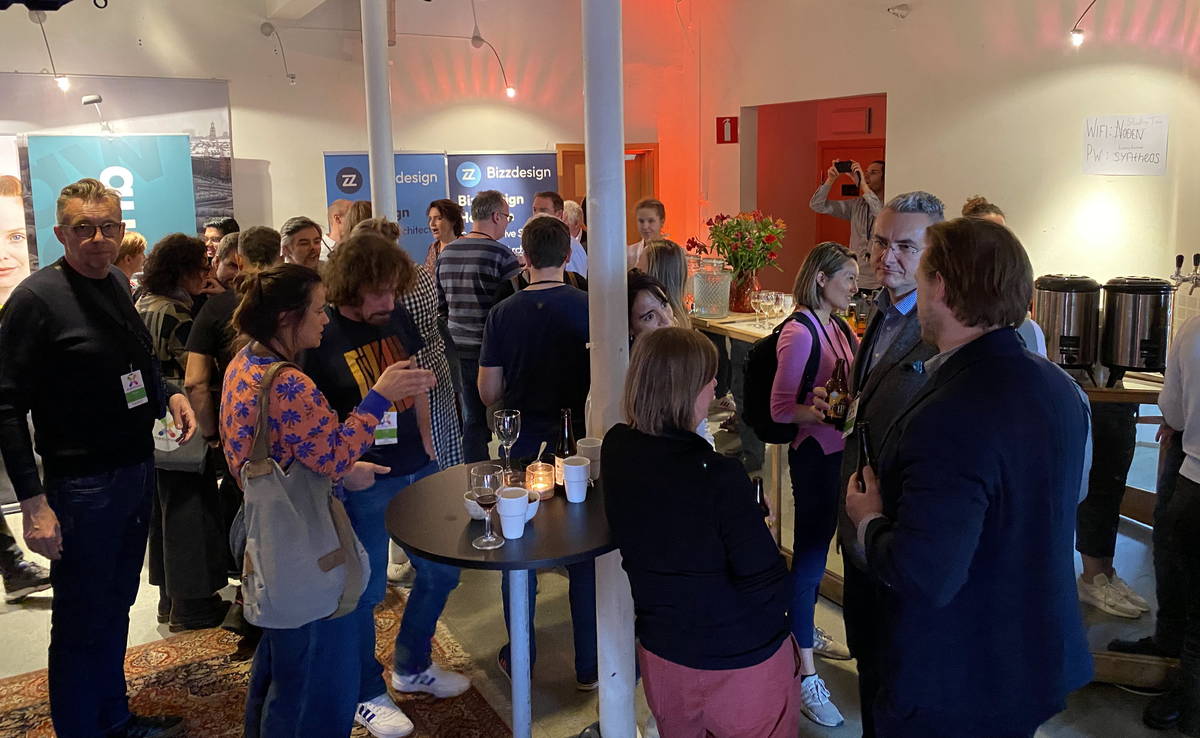
Stockholm, Suède · 2022
La réception qui clôt le jour 2, dans la Salle Square.
Organisée par
Salle Square · Espace Ax.c, 4ᵉ étage
Jeudi soir
À propos du MT Lab
Fondé par l’UQAM et Tourisme Montréal en 2017, et avec l'appui de plusieurs partenaires privés et publics, le MT Lab accompagne l’innovation en tourisme, culture et divertissement, de l’identification des besoins jusqu’à l’expérimentation de solutions. Il relie les besoins concrets des organisations et des territoires aux solutions innovantes capables d’y répondre, réduit les risques liés à leur mise en œuvre et accélère leur progression vers l’adoption. En accompagnant à la fois l’offre et la demande, le MT Lab facilite le passage de solutions prometteuses vers des usages concrets et contribue ainsi au développement économique du Québec.
Vendredi 9 octobre · Journée praticiens

09:15 – 10:45
Play the Enterprise: AI-Boosted Innovation Games for Enterprise Design
Jedi on the Fly designs and facilitates mixed digital/physical innovation game experiences using a purpose-built stack called Ludor. These aren't icebreakers or workshop warm-ups. They're structured game environments where leaders wrestle with real organizational challenges.
Ludor is our custom tool, but we will share the principles behind its creation and by end of session, give people the capacity and clarity to build their own Ludor stack for themselves.
The way we approach enterprise design and change initiatives, AI provides just the right level of boost at exactly the right moment, and nothing more. This is a real design challenge.
We will demonstrate synthetic ai coach personas, that have been co-created with real life coaches and authors from our ED field. The game format makes it possible to compress weeks of alignment work into a single session because play creates conditions for honesty, movement, and decision that conventional formats suppress.
Pour cet atelier, il est fortement recommandé d’apporter votre propre ordinateur portable pour les jeux.
Curtis Michelson is co-founder of Jedi on the Fly and a practitioner at the intersection of enterprise design, innovation facilitation, and AI-augmented intelligence. He has spent three decades working as a strategic facilitator and innovation coach. He is a former speaker at Intersection Group conferences, and a journalist for InnoLead.com where he covers enterprise AI topics. He is currently a participant in the EDGY+AI working group. (www.curtismichelson.com)
Co-founder, Jedi on the Fly
Orlando, United States

09:15 – 10:45
Road-testing EDGY: Building a Community-Of-Practice for Whole-Enterprise Change
We are a small collective of practitioners helping organisations with the tsunami of change being thrust upon them across every scope and scale. We wanted to try out EDGY to help us grow a community of like-minded practitioners to manage that rising global need.
Our methods encompass the full enterprise scope, but are built for use by architects and designers. EDGY provided us with a friendlier, more accessible means to draw people into the conversations about structure, story and change.
How to use EDGY fractally to address whole-enterprise scopes on all levels of the organisation;
How to avoid 'blind-spots' when focussing on single EDGY facets or intersections;
How to link EDGY to whole-enterprise methods to guide strategy, architecture, design, implementation, effectiveness and shared-learning;
This presentation documents our step-by-step process and progress on this journey, how we used EDGY, and now plan to use it in future collaborations.
Nate Gerber is an artist, strategic design, enterprise architecture, and organizational change practitioner. Through Interplxy and as a core member of the Tetradian Collective, he helps organizations clarify purpose, make sense of messy systems, and build strategy into services, operating models, tools, and action. His work spans arts, culture, government, healthcare, software, and social innovation.
Strategic Designer, Interplxy / Tetradian Collective
Toronto, Canada

11:00 – 11:45
From Spark to Funded: Using EDGY to Sequence Early-Stage Enterprise Design
Most startups fail not from lack of effort, but from pursuing outcomes in the wrong order — leaving fundable uncertainties unresolved. This session shows how EDGY was applied to make this sequencing problem visible and correctable.
The Early-Stage Code uses the EDGY formula (People perform Activities, using Objects, to achieve Outcomes) to map 19 Founder Outcomes across all three facets and three intersections into a dependency graph. The order of resolution — not the volume of activity — determines whether an enterprise becomes fundable.
The session reveals how EDGY's facet structure exposed dependency chains that startup advice misses: why Deep Understanding (Experience) must feed Purpose (Identity) before Architecture outcomes are credible, and why facet interplay is what investors evaluate. Attendees will see the Founder's Outcome Map, the five-layer instrument architecture, and real cases (Superhuman, Notion) analysed through EDGY.
Paulo Tonin is Community Lead for Intersection Group in Florianópolis, Brazil, and author of The Early-Stage Code — a systems-based methodology for early-stage founders built on EDGY. His work bridges enterprise design and startup practice, applying the EDGY language to the 0-to-1 journey where most structural failure originates. Paulo works with founders and accelerators to replace intuition-based progress with outcome-driven systems that align what founders pursue with what investors fund.
Community Lead, Intersection Group
Florianópolis, Brazil
11:45 – 12:15
I Have No Visual Imagination. EDGY Doesn't Care!
Some of us are not visual thinkers. Faced with a blank page, we blank. We default to text, because precision feels safer than a diagram we are not sure how to draw.
This session is a confession and a case study. I have almost no visual imagination and close to zero artistic talent. EDGY fixed exactly one of those problems.
What EDGY gives me is a scaffold to start from. A structure that makes my assumptions visible, to myself and to others: about how things work, how things relate, what things are for. Assumptions that would otherwise risk staying buried in paragraphs of text.
The diagram becomes something to point at. Something for the room to probe, question, and build on. It doesn't have to be pretty. It doesn't even have to survive the meeting.
Through real examples from my current work, I'll show how I, despite my lack of visual imagination, use EDGY for structuring thoughts, surfacing assumptions, and enabling more constructive collaboration.
Helgi Björgvinsson is a senior Enterprise Architect with more than 15 years of experience working with architecture, strategy, leadership, and change in complex organisational environments across both the public and private sectors.
He has been actively involved with the Intersection Group for over five years and has been a member of its core group for more than two. Helgi is the principal author of the EDGY Enterprise Scan, where he focuses on helping organisations surface misalignment early, create shared understanding, and design change based on a holistic view of the enterprise.
Managing Director, Intersection Group
Falun, Sweden

14:00 – 15:00
Explore the Enterprise Milky Way
The Milky Way is a visual map for exploring how the enterprise hangs together. We start with existing models in an enterprise repository and use EDGY to follow the links from Purpose to Organisation, Capability, Product and Customer Journey. Embedded AI helps us navigate the repository, discover relationships and visualise them as paths through the Milky Way.
Our aim in this session is not to create another model. It is to use the Milky Way to connect what already exists, see the enterprise as a system, and identify missing or unclear relationships.
Kuno Brodersen. Kuno Brodersen is a seasoned technology leader, co-founder and CEO of QualiWare, a market leading Enterprise Architecture software platform where he has played a central role in shaping the company’s vision for enterprise architecture, governance, risk, and compliance. With decades of experience advising global organizations, he specializes in helping enterprises align business strategy with IT, drive digital transformation, and manage complexity across large-scale environments.
Kuno is a recognized thought leader in enterprise architecture and has worked with organizations across the public and private sectors to improve decision-making, agility, and operational resilience. He is a regular contributor to industry standards such as TOGAF/ArchiMate/BIZBOK among others. As a speaker, he brings a practical, business-focused perspective on how architecture can enable innovation while maintaining control in an increasingly complex digital landscape.
Annika Klyver. Annika Klyver’s work is about making transformations in large organisations happen. She has worked with Enterprise and Information Architecture for over 15 years. She has experience from numerous change and architecture programs in several business lines. Her background is in controlling, business development and within project portfolio management. She has also been a highly appreciated teacher in EA since 2011. Annika is a thought leader in Business Architecture, the ways of working, the visualization of business architecture and she is constantly looking for better ways to create great Enterprises. She is a speaker at international conferences.
Milan Guenther — President, Intersection Group. Milan is president of Intersection Group, and a co-founder of the consultancy Enterprise Design Associates and Teamenu, a digital workplace SAAS business.
12 years back, Milan launched a social software startup and designed a patented innovation for commercial flight decks. Today he works with enterprises of all shapes and sizes, to make them deliver, and useful to people. He's been working with enterprises like Google, SAP, Toyota, the OECD and the UN.
His first book Intersection introduces this Enterprise Design approach, and he is co-organising the Intersection conference series since 2014. He is co-author of the book Enterprise Design Patterns and curator of EDGY, an Open Source tool for co-creating better enterprises, adopted by organisations around the globe.
QualiWare · TRATON R&D · Intersection Group

15:00 – 15:30
How to re-invent an event with EDGY?
Most people think reinventing an event means changing the venue or hiring flashier speakers. The real issue is deeper: most events run on legacy habits that no longer match economic reality or strategic ambition. They optimize the parts while the system drifts.
To change the outcome, you have to break the model. This session is a case study in systemic redesign. I will share how we used EDGY to rethink an event from the ground up, mapping the tensions between our aspirations and financial constraints to make hard choices about what to keep and what to kill.
We will look at the specific EDGY tools used to bridge the gap between strategy and operational reality, focusing on how the economic model drives the ecosystem.
This is a practical guide to structural coherence. You will leave with a clear approach to navigating ambiguity and an open-source EDGY event template to audit, design, or reinvent your own events, large or small.
Jean-Sébastien's path from a graphic designer to UX designer to enterprise designer is filled with diverse and enriching experiences. With his skills in workshop facilitation, he helped his client to better understand the situation and choose a path forward. Since 2019, he has been an integral part of the Intersection Group, where he leads the development of workshops for the organization. Jean-Sébastien frequently shares his insights on the essential qualities of a designer in various conferences and mentoring sessions. His expertise in enterprise design and commitment to many design communities are evident in his role as a partner at &friends, a consulting firm in Canada.
Enterprise Designer, &friends
Quebec City, Canada
Partenaire du lieu
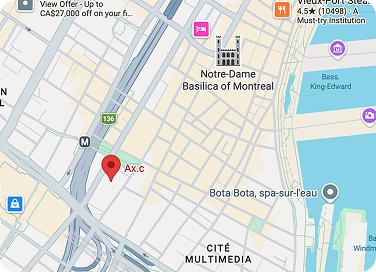
Carte : Google Maps
Nous sommes ravis de nous associer à Ax.c ! Véritable lieu de rassemblement pour l’écosystème québécois des startups, l’Espace Ax.c réunit une masse critique d’acteurs clés de l’entrepreneuriat technologique et innovant.
Ses membres, locataires et utilisateurs contribuent activement au succès de cet espace, qui possède tout le potentiel pour s’imposer sur la scène internationale comme un pôle d’innovation de renommée mondiale — la bonne salle, donc, pour une conférence sur ce qui dure.

| Passe | Tarif normal | Achat de groupe (5) * |
|---|---|---|
| 3 jours | $600 | $2,750 ** |
| Jours 1 et 2 | $450 | $2,000 |
| Day 1 Capacité de 350 | $225 | $1,000 |
| Day 2 Capacité de 350 | $225 | $1,000 |
| Day 3 Limité à 150 | $225 | $1,000 |
* Pour les achats de groupe, contactez-nous directement :
jsdaigle@andfriends.ca
** Vous figurez aussi comme commanditaire de l’événement.
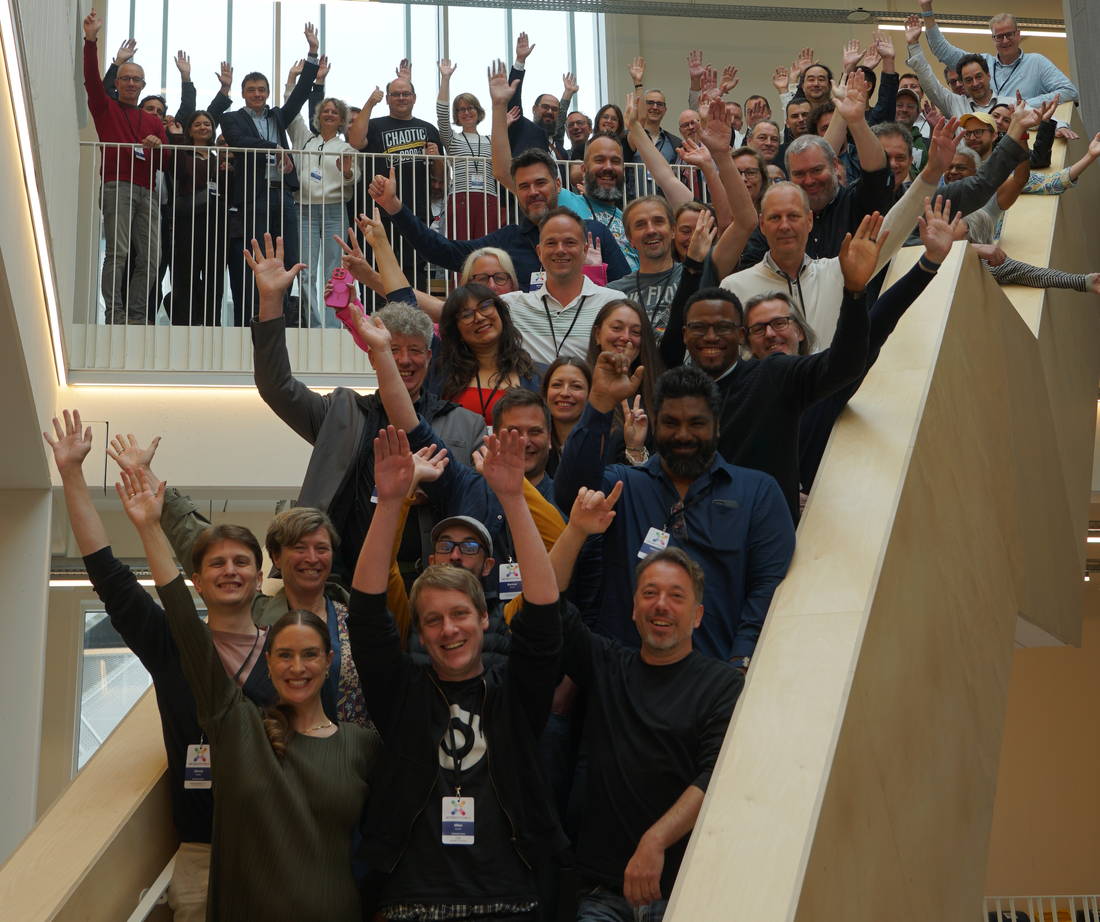
Bruxelles, Belgique · 2025
Intersection Group est un OBNL fondé en 2020, qui anime une communauté lancée en 2012 et présente dans 50 pays via 10 antennes locales actives. Il publie EDGY, le langage ouvert de design organisationnel, lancé en 2023.
9,000+
Abonnés à l’infolettre
5,000+
Abonnés sur LinkedIn
1,300+
Membres sur Slack
100+
Webinaires et « campfires »
50
Pays
10
Antennes locales actives
Beyond the Spark.